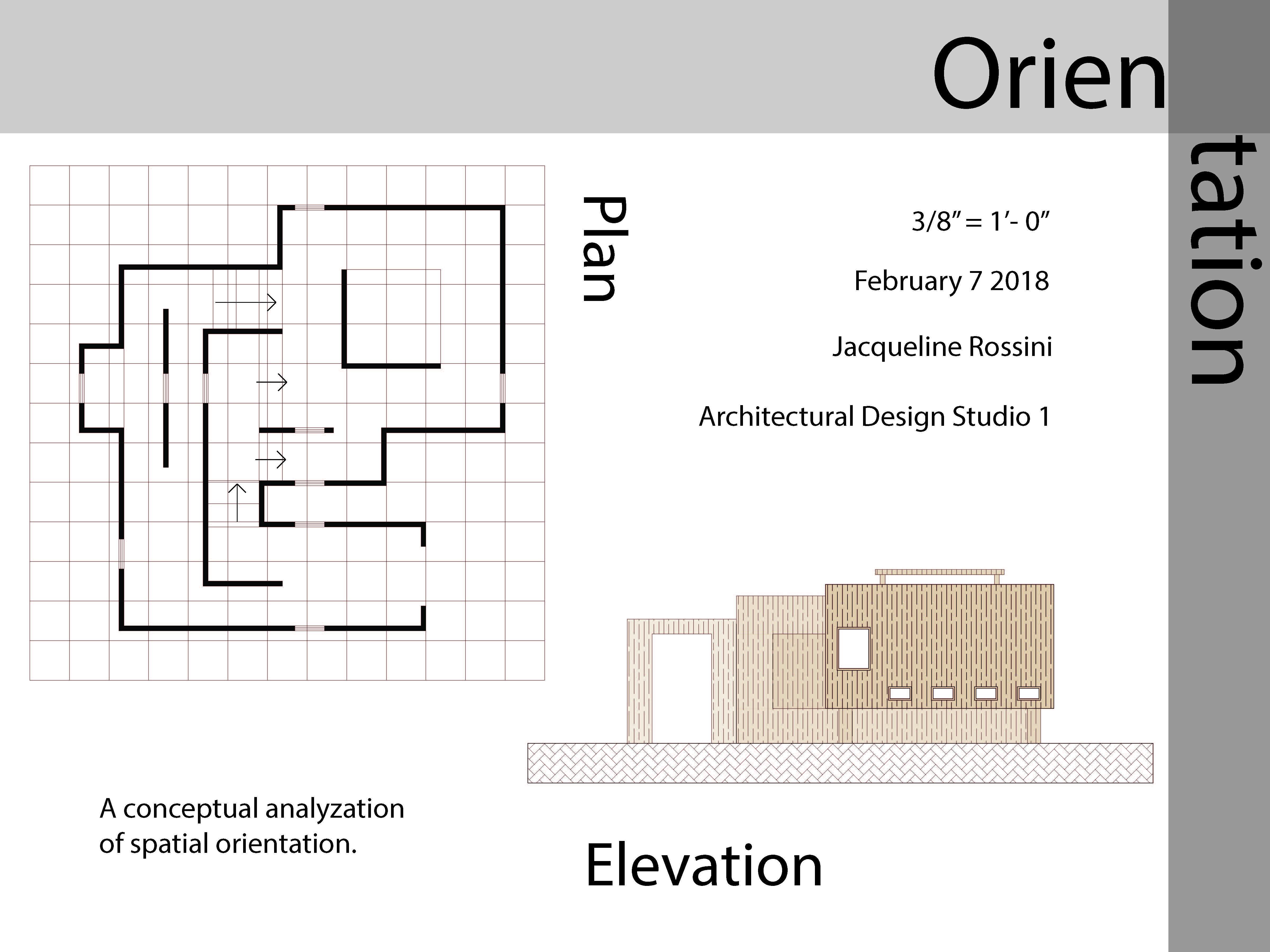
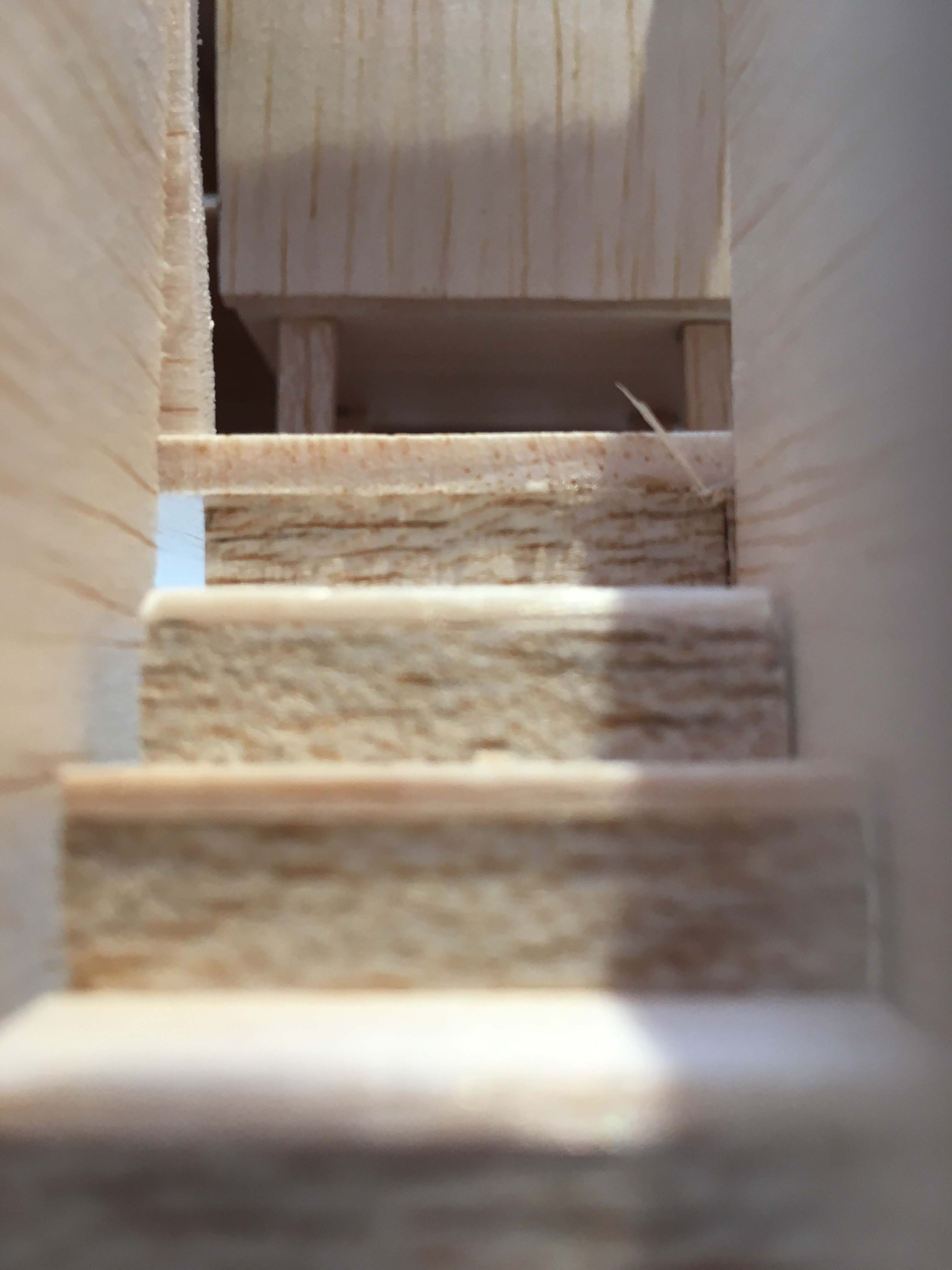
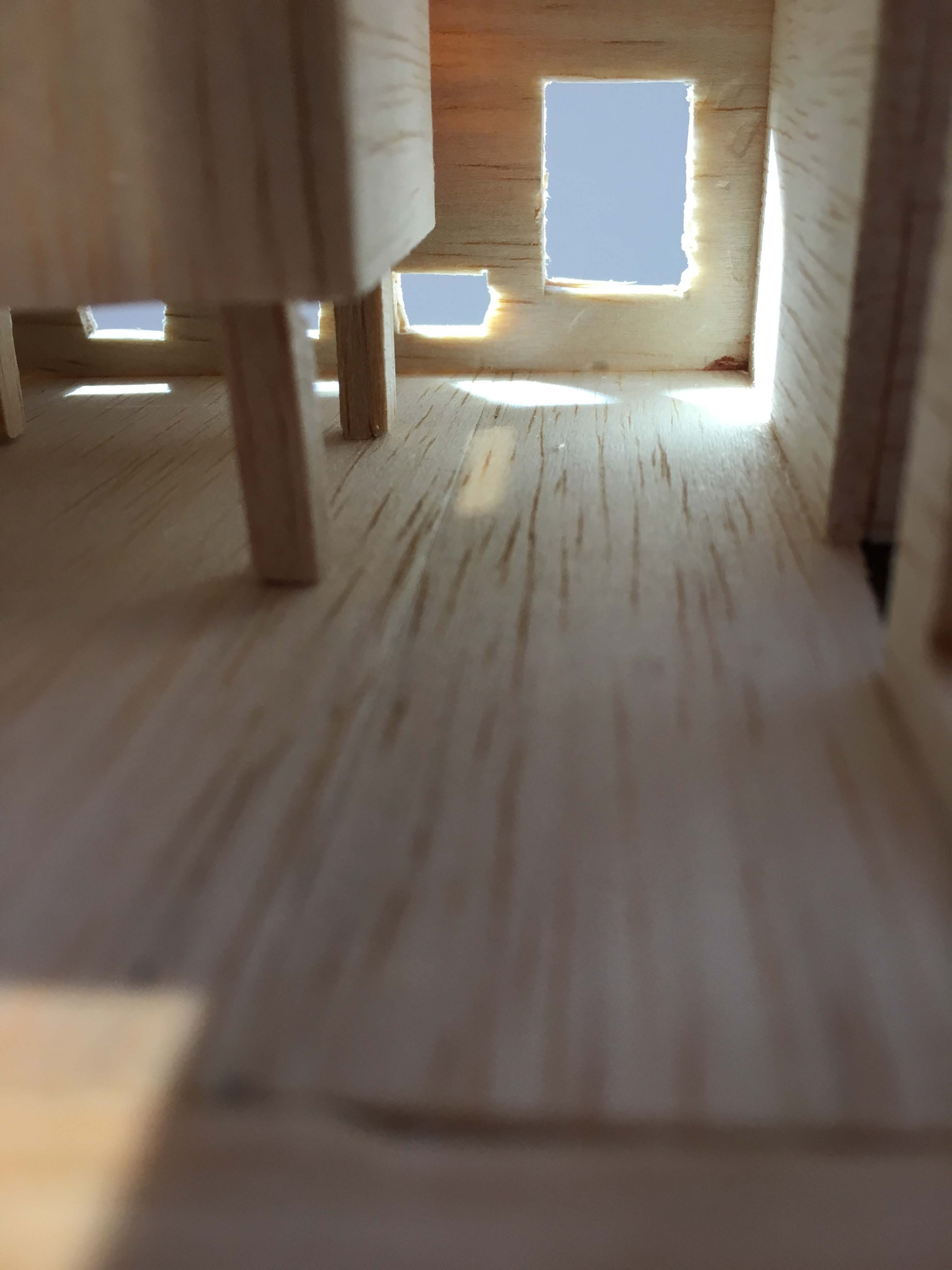
The space, Orientation, creates an organization of spaces, which force the person to interact with it. Small walkways cause a person to interact individually, with only space for one person at a time while walking. In shared areas there is enough space to stand, lay down, and sit with multiple people. The entrance causes individuals to interact in two ways through different experiences while both entering and exiting. Orientation creates a space for both adults and children to interact differently. A crawling space can be used by children, as well as thin wall spaces forcing adults to turn sideways to pass through, while children can walk straight through. Two lines of windows perpendicular to each other pass through the entire structure creating vistas, where individuals can see from one side of the pavilion to the other.

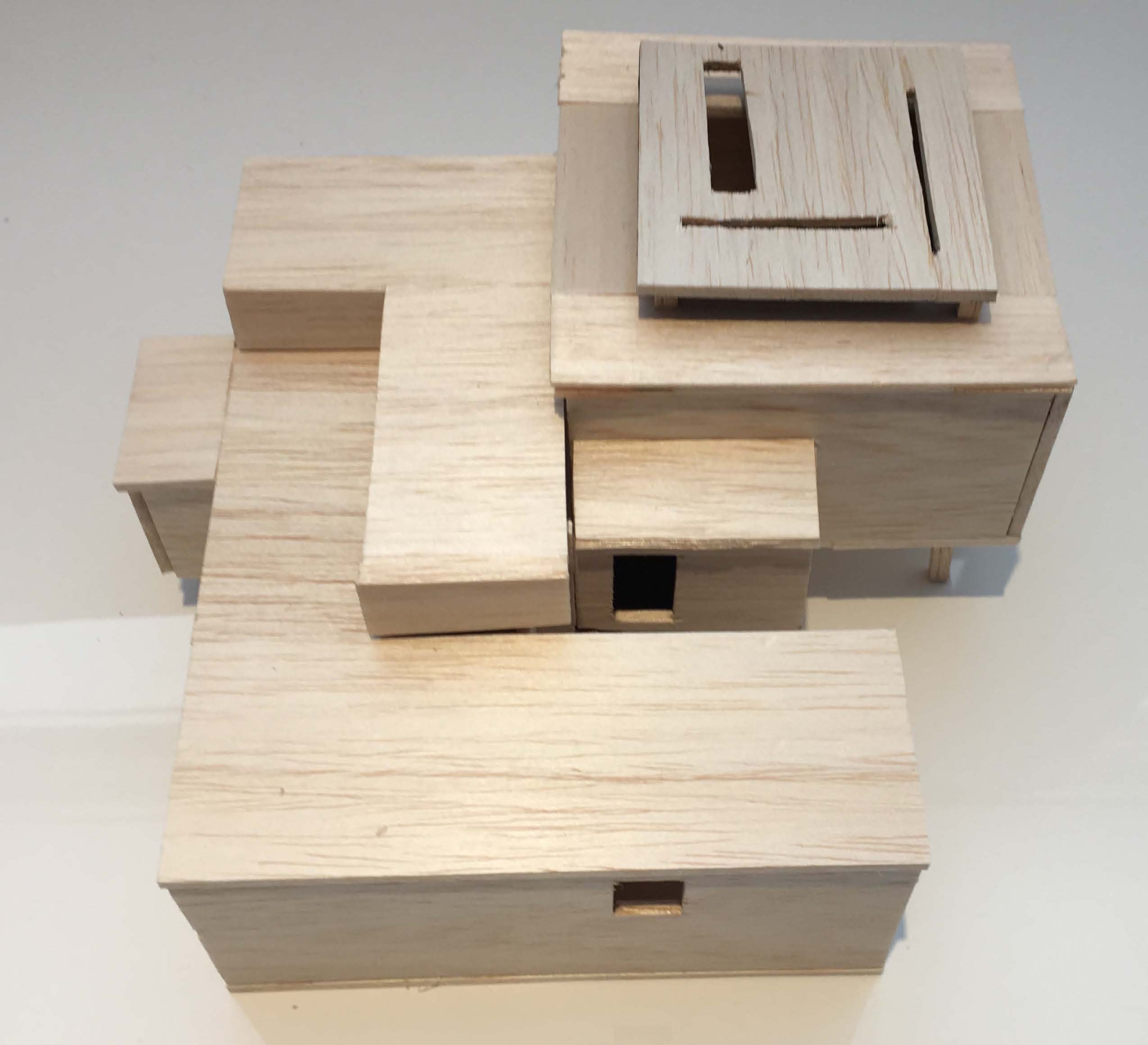
Two materials are used within the structure, light and dark wood. The contrast shows the light wood throughout, whereas the dark wood indicated the spaces in which to intentionally interact with the structure. The darker wood shows the option for individuals to pause within the space, whereas the light wood becomes the unintentional interaction with the individual.
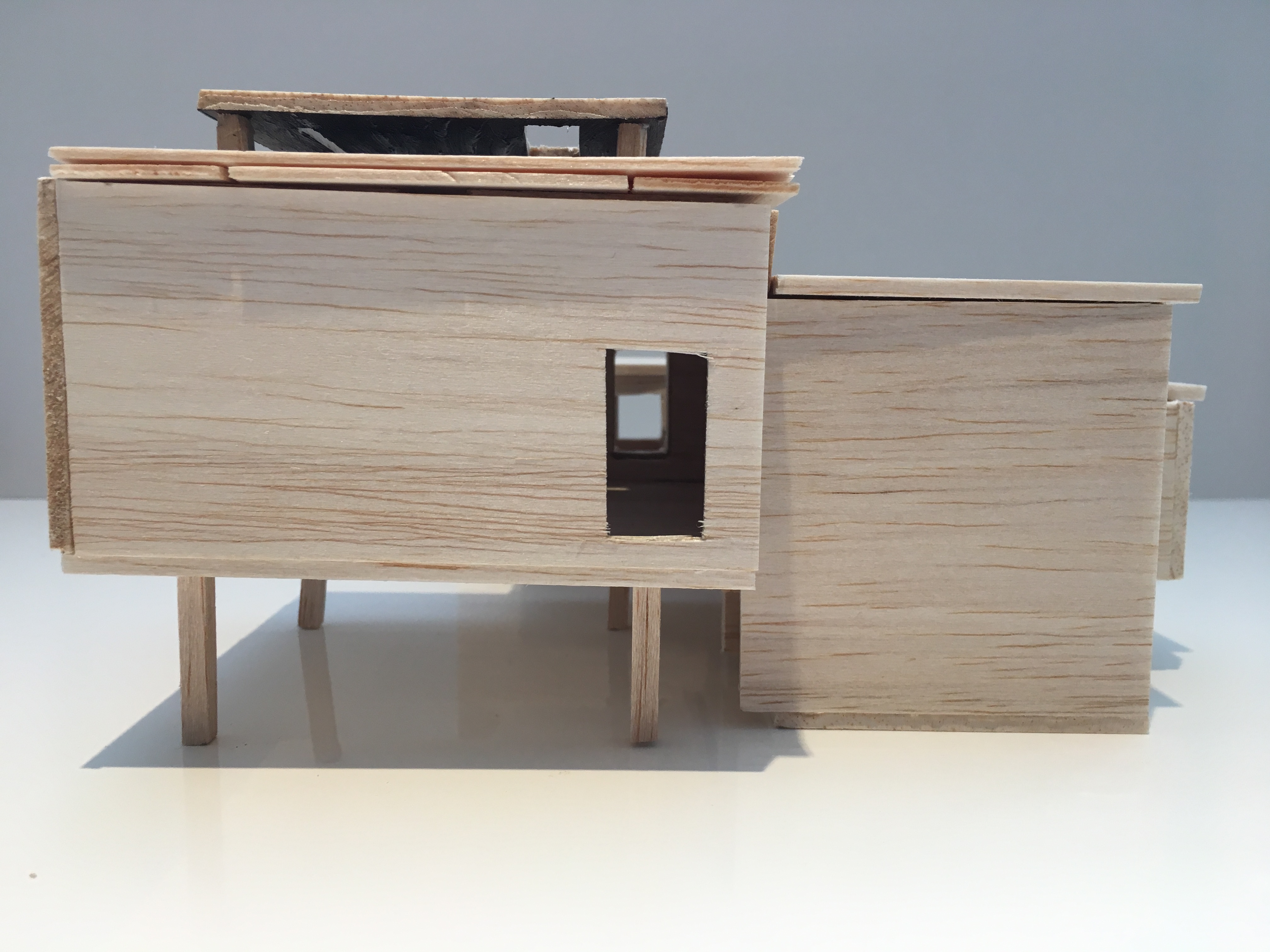
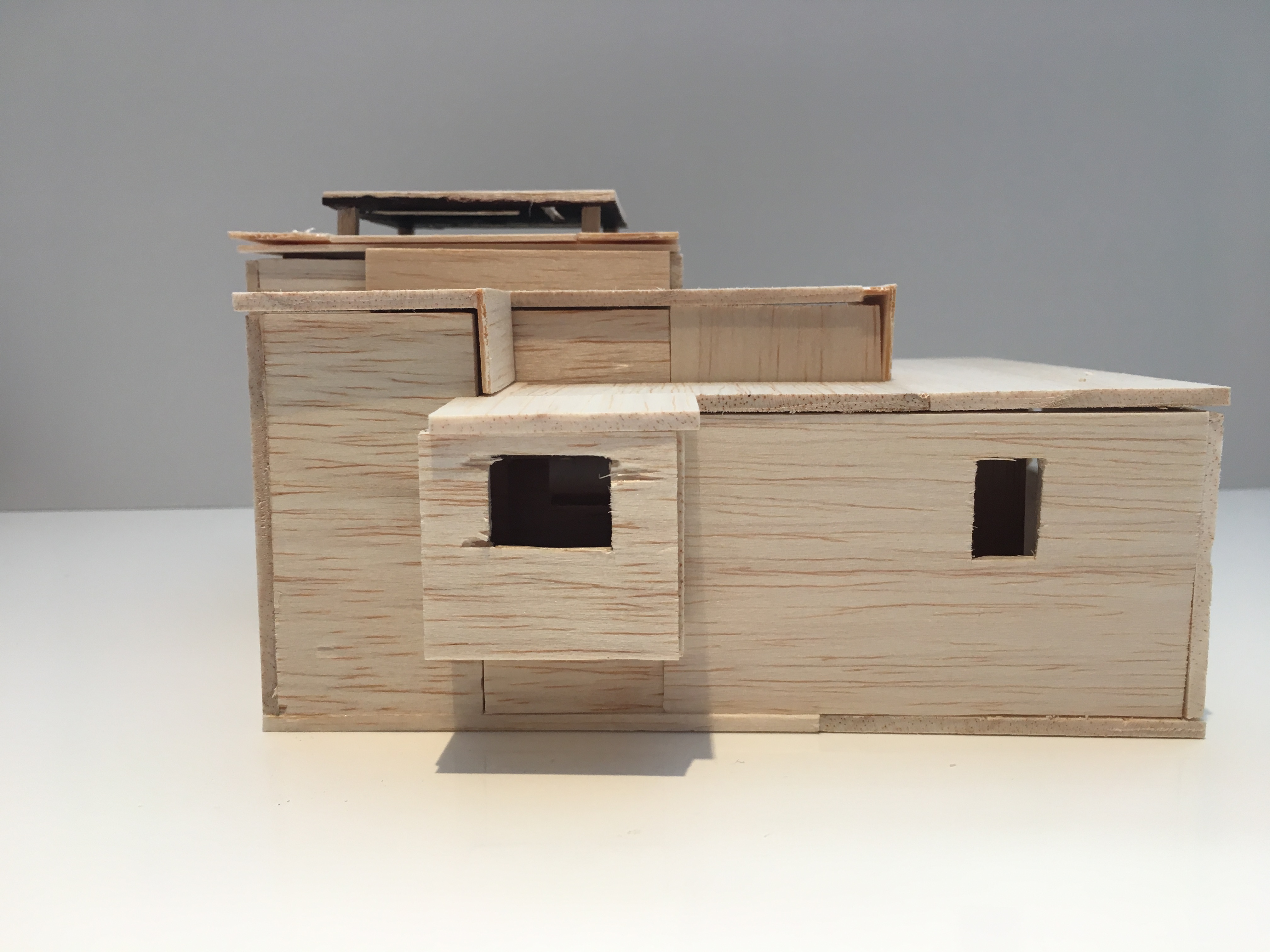
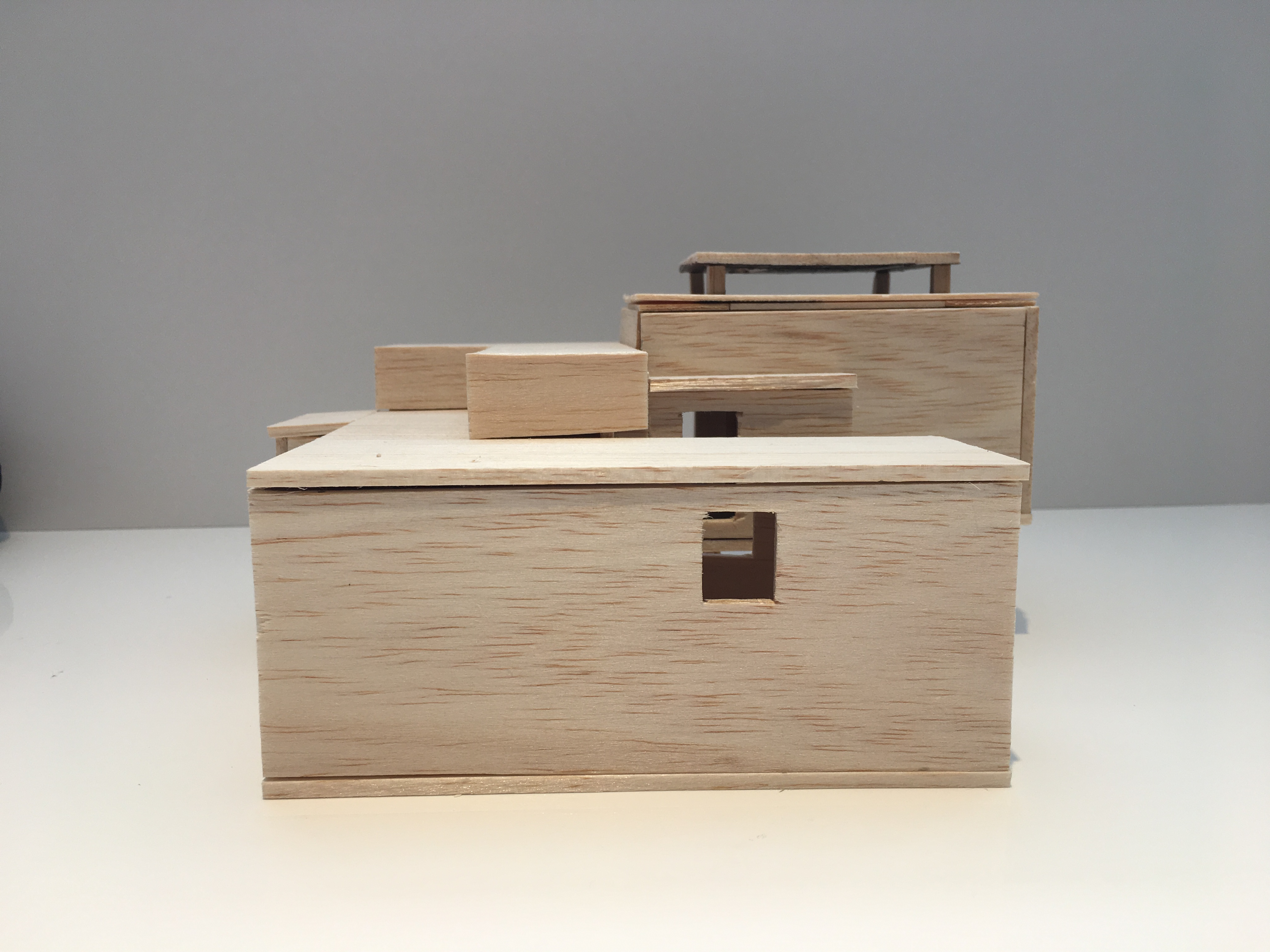
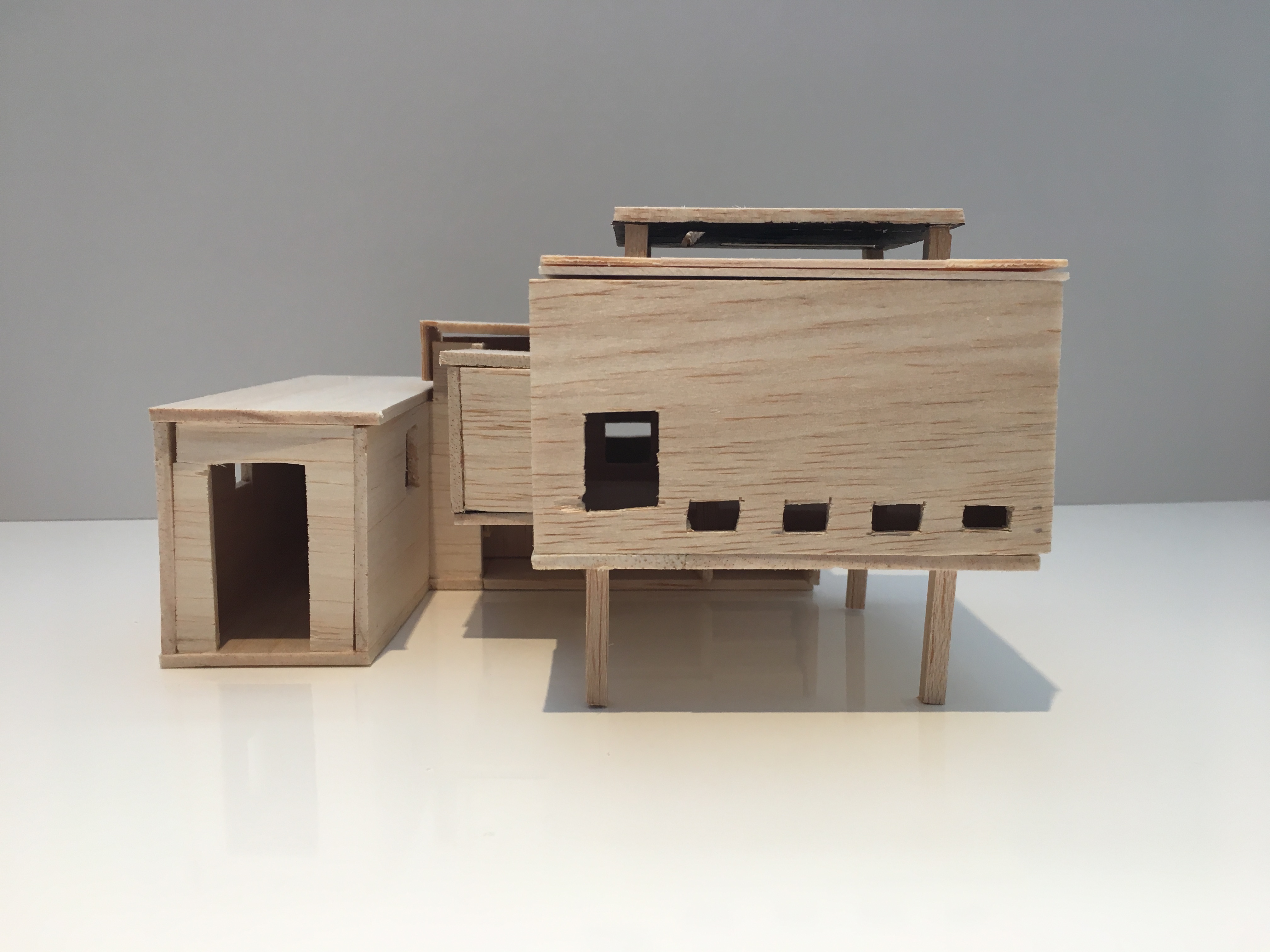
When entering the space, individuals can choose two paths, both leading to a larger space where the ceiling is heightened above with opening to follow the sun’s path. Openings on the bottom along one wall constantly create moving patterns along the ground and the individuals moves throughout the space. A raised platform in the middle of the room creates the opportunity for individuals to lay down upon, protected by two walls from the rest of the pavilion where individuals are able to look up and view through openings within the raised roof. Through Orientation’s spatial conception, individuals are constantly being both forcibly and optionally directed and oriented within the pavilion.


 Jacqueline Rossini